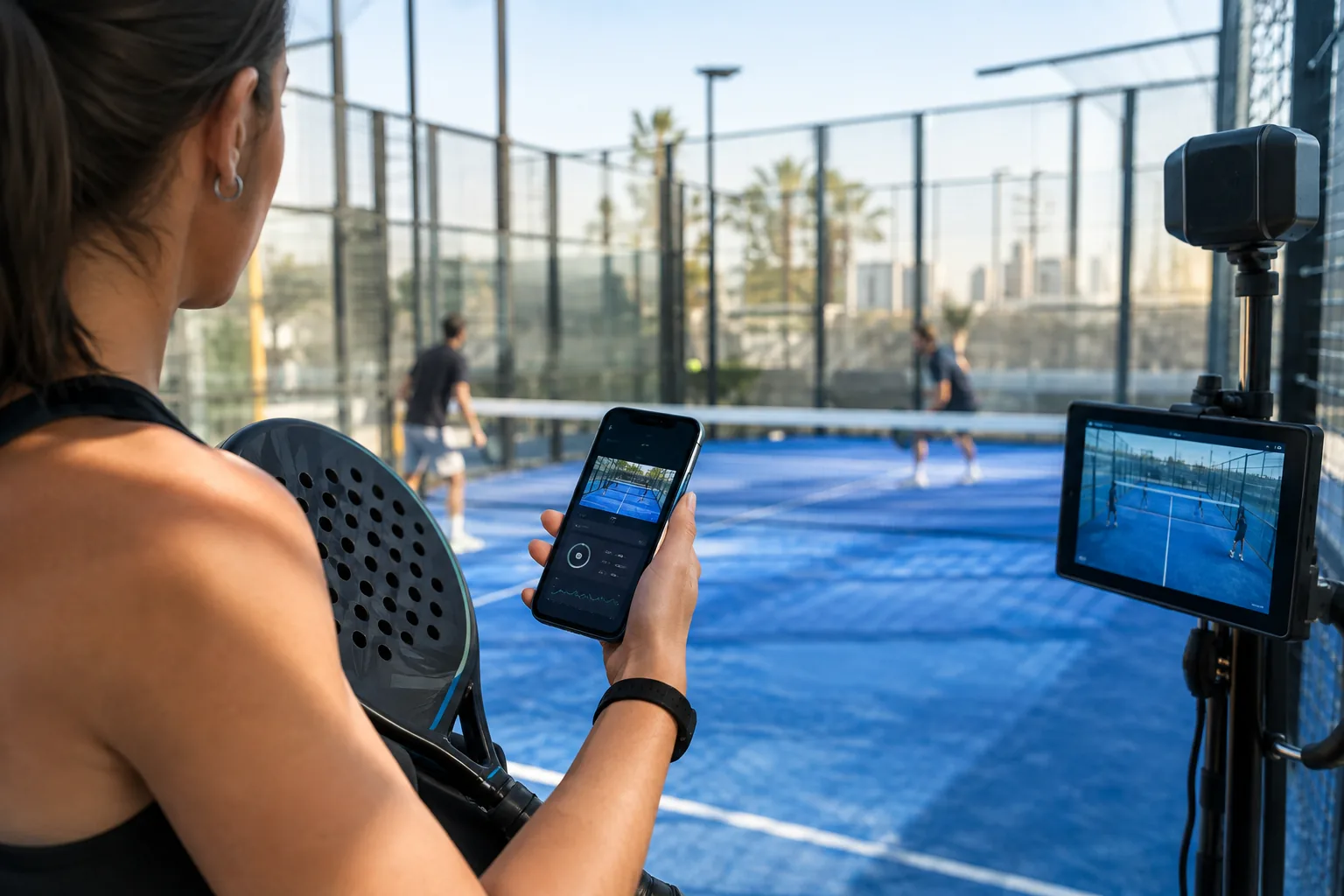
Padel clubs have traditionally relied on spreadsheets, messaging groups, and manual administration to organise competitions. These methods can work for small events, but they become harder to manage as participation grows.
Technology is changing that.
Today, padel club competition software can connect player registration, scheduling, match communication, results, rankings, and competition updates in one digital environment.
The change is not simply about replacing paperwork. It is about creating a smoother competition experience for clubs, coaches, organisers, and players.
A padel competition involves many moving parts.
An organiser needs to know who is participating, which matches need to be played, whether players have arranged their games, which results have been submitted, and whether the competition is progressing according to schedule.
In a manual system, these tasks may be spread across several tools.
A spreadsheet might contain the standings. A messaging group might contain match arrangements. Email could be used for announcements, while another document records registrations.
Technology brings these activities closer together.
Instead of constantly moving information from one system to another, clubs can use competition software to manage more of the process from a central platform.
That creates a more connected journey:
Registration → Competition setup → Match scheduling → Results → Rankings → Final standings
The competition experience starts before the first ball is hit.
If joining a tournament requires players to message an organiser, fill out a form, and wait for manual confirmation, the registration process can become unnecessarily complicated.
Digital registration gives players a clearer way to discover and enter competitions.
For organisers, it creates a central participant list and reduces the need to manually collect names from different sources.
This becomes especially useful when a club runs several competitions at the same time.
A club could have a monthly box league, an ongoing ladder, and a weekend Americano. Managing registrations for all three manually can quickly become time-consuming.
A digital platform can make participation easier to manage across the club.
Padel clubs do not all compete in the same way.
Some members may enjoy traditional knockout tournaments, while others prefer ongoing ladder challenges or structured box leagues.
Social players may enjoy Americanos, where partners and opponents rotate throughout the event.
Technology makes it easier for clubs to offer multiple formats without creating an entirely different administrative system for each one.
Box leagues give players a defined group of opponents and a set period for completing matches.
Digital tools can help organisers create groups, track fixtures, record scores, and monitor progress.
Ladders focus on ranking and challenges.
Technology can make it easier to maintain rankings and keep track of results as players move up or down the competition.
Knockout events require clear progression from one round to the next.
A digital system can keep results connected to the tournament structure and make progression easier for players to follow.
Americanos require multiple rounds with rotating partners and opponents.
Automating the schedule and leaderboard can remove much of the complexity associated with organising these events manually.
Matchspace supports box leagues, ladder leagues, knockout competitions, and Americanos, allowing clubs to offer different competition experiences within one platform.
One of the biggest changes technology brings to padel competitions is greater player responsibility.
Traditionally, an organiser may have been responsible for arranging almost everything.
Players would contact the organiser to ask about opponents, schedules, deadlines, or results.
A digital competition platform can put much of that information directly in the player's hands.
Players can access their matches, communicate with opponents, arrange games, submit results, and follow competition progress without relying on an organiser for every small detail.
Matchspace supports player communication, match arrangements, RSVP features, notifications, and score submissions through its platform.
This does not eliminate the organiser's role.
Instead, it changes the role from managing every interaction to overseeing the competition.
Scheduling is one of the biggest challenges in club competitions.
Players have different working hours, family responsibilities, holidays, and other commitments. Padel courts may also have limited availability.
Trying to coordinate every match centrally can create a large administrative workload.
Technology allows players to take greater responsibility for finding suitable times.
For formats such as box leagues, players can communicate with opponents and arrange their matches within the competition rules.
The organiser establishes the deadline and monitors progress rather than becoming involved in every conversation.
This can make competitions more flexible without sacrificing structure.
Another major change is the way results are recorded.
In a manual competition, players might send scores through WhatsApp. The organiser then has to find the correct fixture and update a spreadsheet.
This creates duplicate work.
With competition software, players can submit their results directly.
The process becomes much simpler:
Match finished → Score submitted → Result recorded → Competition updated
Matchspace allows players to submit and verify scores through its app, connecting results with competition progress and player profiles.
For organisers, this means less manual data entry.
It can also reduce the risk of forgetting to update a result or entering a score in the wrong place.
Technology can make competition progress much more transparent.
In a traditional system, players may have to ask an organiser for the latest standings.
With digital competition management, rankings and results can be available to participants as part of the platform.
This is particularly valuable for ladder competitions.
Players can see where they stand and understand what they need to do to improve their position.
For box leagues, players can follow their results and standings during the competition.
For tournament formats, they can track who has progressed through the rounds.
Visibility creates another reason for players to remain engaged.
Technology is also changing how clubs communicate with players.
Instead of relying entirely on WhatsApp groups or email chains, clubs can use competition-specific communication.
Players can communicate with opponents about matches, while organisers can send relevant announcements and reminders.
This separation can make communication more manageable.
For example, a player does not need to search through hundreds of unrelated messages to find information about their next match.
Matchspace includes messaging, notifications, reminders, broadcasts, and competition updates, helping clubs keep communication connected to the competition itself.
A competition can lose momentum when players forget deadlines.
This is particularly common in longer-running leagues where matches are played over several weeks.
Automated reminders can help players remember upcoming matches or incomplete fixtures.
For organisers, this reduces the need to repeatedly send individual reminders.
The technology does not force players to participate. Instead, it provides timely prompts that help keep the competition active.
This can be especially useful for box leagues where every player is expected to complete several matches within a defined period.
Competition software is not only about reducing administration.
It can also make competition more enjoyable.
Players can see their results, rankings, achievements, and progress. These features can create small motivational targets throughout a season.
Matchspace includes player profiles, rankings, achievements, and digital trophies that recognise milestones and competition activity.
For example, a player may be motivated by moving up a ladder, winning a difficult match, or earning recognition for an achievement.
These elements can turn a competition from a series of disconnected matches into an ongoing club experience.
Technology is also useful for padel coaches.
Coaches often want players to compete regularly because match experience can complement training.
However, organising competitions manually can take time away from coaching.
Competition software can allow coaches to create structured activities without personally coordinating every match.
A coach might organise a box league for players at a similar level or create a ladder that encourages members to compete between coaching sessions.
Matchspace provides competition-management tools for coaches, including support for ladder, box, and knockout formats.
This gives coaches another way to encourage regular match play without adding the same level of administrative work.
When competition administration becomes easier, clubs may be able to offer more opportunities to members.
Instead of organising only one or two large tournaments each year, a club could create a broader competition programme.
For example:
Monthly box league → Seasonal ladder → Club championship → Social Americano
Each format can serve a different group of players.
Competitive members may focus on rankings and tournaments, while newer players may prefer social formats.
Technology makes it more practical to manage these different activities without requiring an organiser to build every system from scratch.
Digital platforms also create a clearer record of competition activity.
Clubs can see which competitions are active, which players are participating, and how events are progressing.
Over time, this information can help clubs understand their members better.
For example, a club might notice that ladder competitions attract regular participation while certain tournament formats have lower engagement.
That information can influence future competition planning.
Instead of relying entirely on assumptions, clubs can use actual competition activity to decide what to offer next.
Despite all these advantages, technology should not remove the social nature of padel.
Padel is a community-driven sport.
Players still want to meet people, compete, communicate, and enjoy time on court.
The purpose of competition technology is to remove unnecessary friction around those experiences.
An organiser should not spend hours updating a spreadsheet when that time could be spent supporting players.
A coach should not have to chase every result when they could be helping players improve.
A club should not need several disconnected tools just to run a simple league.
Technology should handle the repetitive work while people focus on the experience.
Matchspace is designed around racquet sports and brings clubs, coaches, organisers, and players into a shared competition environment.
For padel, the platform supports box leagues, ladder leagues, knockout tournaments, and Americanos.
Players can join competitions, arrange matches, communicate with opponents, submit scores, and follow their progress.
Organisers and clubs can create competitions, manage settings, monitor results, send updates, and use notifications to keep events moving.
This approach reflects the broader direction of club competition management: fewer disconnected administrative processes and more participation through one digital experience.
The value is not simply that a club has replaced its spreadsheet.
It is that the entire competition journey becomes easier to manage.
Not every platform will suit every club.
Before choosing software, clubs should consider how their competitions currently work and which administrative tasks consume the most time.
Look for a platform that offers:
Most importantly, the platform should be easy for players to understand.
If technology creates more confusion than the manual system it replaces, it has missed the point.
Technology is making registration, scheduling, score submission, communication, rankings, and competition updates easier to manage through digital platforms.
Yes. Automated reminders, player-led scheduling, direct score submission, and centralised competition management can reduce repetitive administrative tasks.
Yes. Depending on the platform, clubs can manage formats such as box leagues, ladder leagues, knockout tournaments, and Americanos.
Yes. Competition platforms can allow players to communicate with opponents, arrange games, RSVP to matches, and receive reminders.
It can. Rankings, achievements, digital trophies, progress tracking, and timely competition updates can encourage players to remain active.
Yes. Coaches can use competition platforms to create structured match-play opportunities and monitor results without handling every administrative task manually.
Yes. Even smaller clubs can benefit if coaches or volunteers spend significant time managing registrations, schedules, results, or communication.
Technology is changing padel club competitions by making the entire process more connected.
Registration can become easier, players can take more responsibility for arranging matches, scores can be submitted directly, rankings can remain visible, and organisers can spend less time handling repetitive administration.
For clubs, the opportunity is bigger than simply replacing spreadsheets. Digital competition management can make it easier to offer more formats, encourage regular participation, and create a stronger competitive community.
Matchspace supports this approach by bringing padel competitions, player communication, scheduling, results, rankings, and engagement into one environment.
As padel continues to grow, clubs that use technology thoughtfully can spend less time managing competitions and more time creating better experiences for the people who play them.
Start your free trial now and book a quick demo so we can help you set up your first competition.